
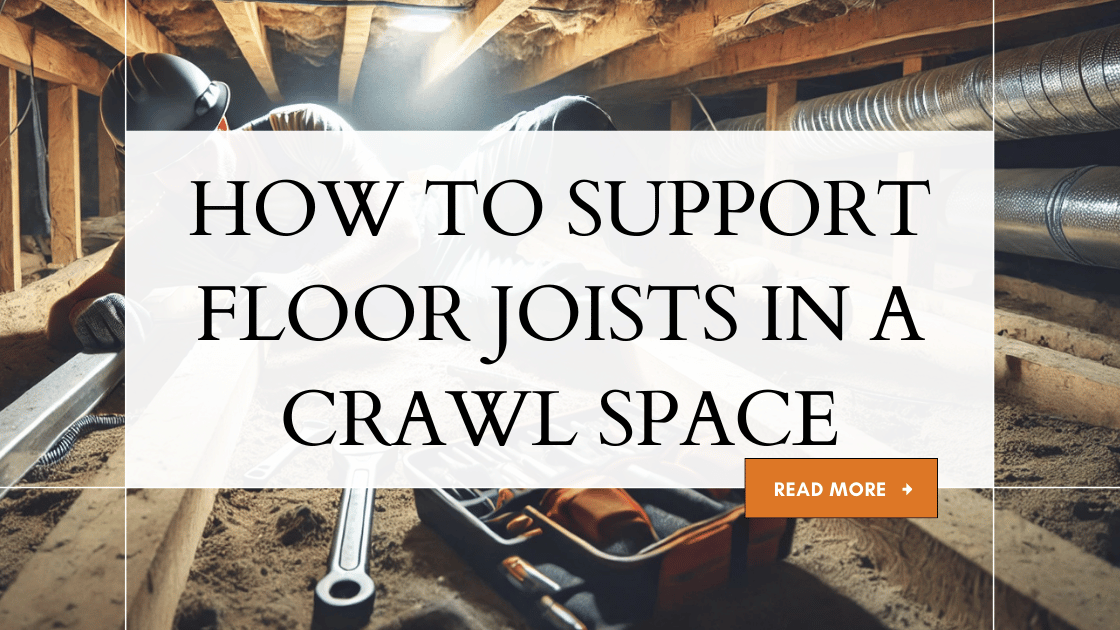
If your floors feel bouncy or uneven, or you’ve noticed cracks in your walls, you might be dealing with a common issue: unsupported or weakened floor joists in your crawl space. It’s a problem many homeowners face, but the good news is, it’s fixable—and not always as expensive or invasive as you might think.
Let’s walk through everything you need to know about floor joist support in crawl spaces—and why the EverJack might be your best bet for a long-term solution.
Understanding Crawl Spaces
What is a Crawl Space?
A crawl space is the shallow area between the ground and the first floor of a home, often ranging from 1 to 3 feet in height. It gives access to plumbing, wiring, and HVAC systems but also requires maintenance to avoid structural issues.
Types of Crawl Spaces
- Vented crawl spaces: Have outside vents to allow air circulation.
- Unvented crawl spaces: Sealed and insulated, better for energy efficiency and moisture control.
Pros and Cons
Pros:
- Easy access to utilities
- Cost-effective foundation solution
Cons:
- Prone to moisture and pests
- Can lead to sagging floors without proper support
Importance of Floor Joist Support
Floor joists are like the bones of your floor—they distribute weight and keep everything level and solid. If they fail, your whole house feels the impact.
Signs You Need Support:
- Uneven or sagging floors
- Cracks in drywall
- Doors that won’t close properly
- Creaking or bouncy floors
Ignoring these signs can lead to much more serious (and expensive) structural issues.
Common Causes of Floor Joist Damage
- Moisture and Humidity: Causes wood rot and mold
- Poor Soil Conditions: Can cause settling or shifting
- Aging and Wear: Wood naturally degrades over time
- Termite Damage: These pests love to feast on joists
Inspecting Your Crawl Space
Before you start making changes, take a good look under the hood.
Checklist:
- Look for visible sagging or bowing
- Use a flashlight and moisture meter
- Tap joists to check for soft spots
- Note any musty smells (a sign of mold)
Call in a pro if you spot significant damage, or you’re unsure what you’re seeing.
Methods to Support Floor Joists
There are a few ways to reinforce joists, depending on how bad the damage is:
- Sistering Joists: Adding a new board alongside the damaged one
- Adding New Joists: Placing new ones between the existing for extra strength
- Adjustable Supports: Like the EverJack, these props go underneath the joists to lift and hold them in place
Meet the EverJack
Say hello to your new best friend in crawl space support.
The EverJack is a molded composite footing assembly designed to support wood posts in crawl spaces. It’s load tested up to 10,000 lbs and is IBC and IRC compliant, so it meets the strictest building codes.
Why People Love It:
- Over 3,400 installations (as of April 17, 2025)
- Super easy to install
- No rust, no rot, no worries
How EverJack Works
Design and Material
Made from advanced aerospace-grade composite, the EverJack doesn’t rust, warp, or weaken over time. It includes:
- A ribbed base pad for stability
- An adjustable threaded cap bolt
- A boot disc to center the post
How It Supports Loads
The EverJack transfers the weight of the floor joist:
- From the post
- Through the cap bolt
- Into the base
- Spreading it evenly onto the ground or foundation
Installing EverJack in Crawl Spaces
Step-by-Step:
- Prep the Ground: Make sure it’s flat and solid (soil or concrete).
- Place the Base: Put the EverJack on the prepped spot.
- Adjust the Cap Bolt: Twist it up to the right height.
- Center the Post: Use the boot disc to align it perfectly.
- Secure Everything: Make sure there’s at least 1 inch of thread engagement.
Conditions of Use
- Must be installed above -20°F
- Not UV resistant, so it stays under floors
- Must be on flat soil or approved concrete
- Can’t be used below finished grade
Benefits of Using EverJack
- Strength: Handles up to 10,000 lbs
- Durability: Won’t corrode or degrade
- Ease of Installation: No heavy machinery needed
- Low Maintenance: Set it and forget it
Mistakes to Avoid
- Don’t place it on uneven ground
- Don’t skip the boot disc—it centers the post
- Don’t exceed height limits
- Always follow the manual—more restrictive rules always win
Budgeting for Crawl Space Repairs
EverJack installations typically range from $150 to $500 per unit installed (including labor) depending on your situation.
This is often a cost-effective long-term solution compared to full joist replacements or structural jacks.
When to Call the Pros
- If the damage is widespread
- If you’re unsure about soil load capacity
- If you need permits or have complex structural needs
Conclusion
Supporting your floor joists is one of those “hidden” tasks that pays off big in the long run. If you’re dealing with sagging, creaking, or cracking floors, a smart solution like the EverJack can provide the support your home needs—without breaking the bank or turning your crawl space into a construction zone.
It’s strong, tested, easy to install, and built to last. What more could you want?
FAQs
Q1: Can EverJack be used in wet crawl spaces?
Only if the moisture is controlled and the ground is properly prepared. EverJack isn’t for standing water situations.
Q2: How long does EverJack last?
It’s made from aerospace-grade composite, so you’re looking at decades of reliable performance—easily 30+ years with proper installation.
Q3: Is EverJack DIY-friendly?
Absolutely. Many homeowners handle it themselves, especially for light repairs.
Q4: Can I reuse EverJacks if I move?
Yes, just unscrew and reinstall—but check soil and building codes first.
Q5: Does EverJack require maintenance?
Nope! Once it’s installed properly, you’re good to go.